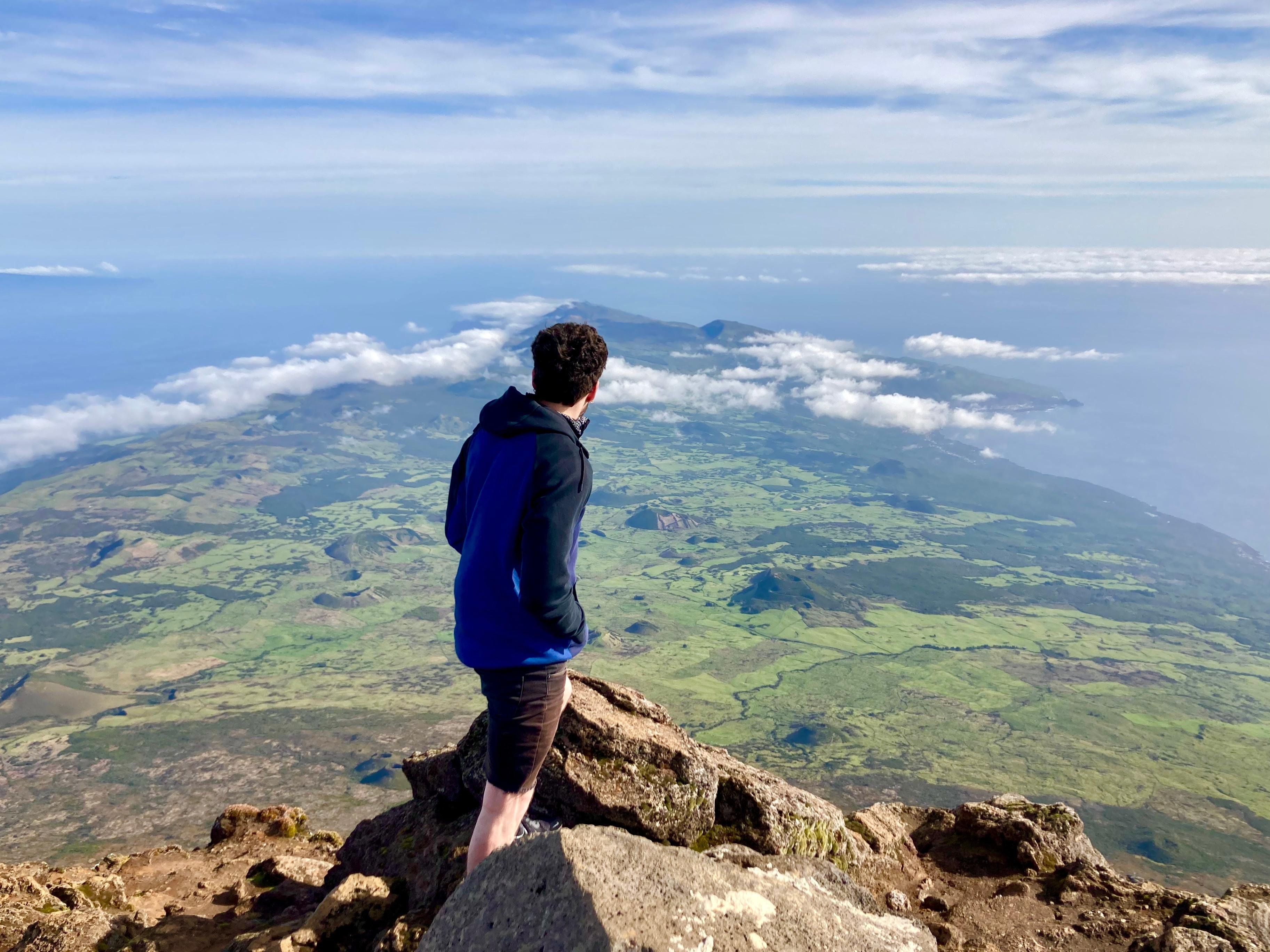
A climber on Pico’s rocky summit looking down over the island
Portugal’s highest summit · 2,351 m

Guided Mount Pico Climb

Leave the Mountain House at 1,230 metres, climb over volcanic rock and loose ground to the crater, then scramble up Piquinho to stand on the highest point in Portugal. A guided Mount Pico climb adds a safety briefing, a steady pace and help on the descent that many hikers find hardest.

The climb

What climbing Mount Pico really involves

The route starts and ends at the Mountain House and covers just under 8 kilometres, gaining roughly 1,100 metres on the way to the 2,351-metre summit. The ground changes as you go, from mud and solid rock to loose rock and sand, and the final stretch up Piquinho uses your hands for balance. Everyone must register before climbing, wear proper boots and carry at least 1.5 litres of water, and the trail takes a maximum of 320 visitors a day.

Climbing on your own is allowed once you have registered. A guide makes most sense if you have never climbed on loose volcanic ground, want someone to judge the conditions on the day or would rather not arrange the registration yourself. Both climbs below are rated 4.9, include poles and insurance and cover the reserve fees in the price.

Compare tours

Two guided Pico climbs compared

Both standard climbs start at the Mountain House and ask for good fitness. They differ in price, in what the guide provides and in the option of a night climb for sunrise. Prices are per person, with free cancellation up to 24 hours ahead.

A climber on Pico’s rocky summit looking down over the islandTop rated

Pico · Meets inside the Mountain House

Pico Mountain Climb: Your Path to Portugal’s Highest Point

Hominis natura

4.9rating8 hours

A 20-minute safety briefing, certified guides and the reserve access fee in the lower price. Send each climber’s name, date of birth and nationality when you book so the operator can register you.

  • Access fee, poles, insurance and certificate included
  • Climbers should manage about 300 metres of altitude per hour
  • Not suitable for children under 12 or people over 70

Free cancellation up to 24 hours before

From €90 per person

Book Now
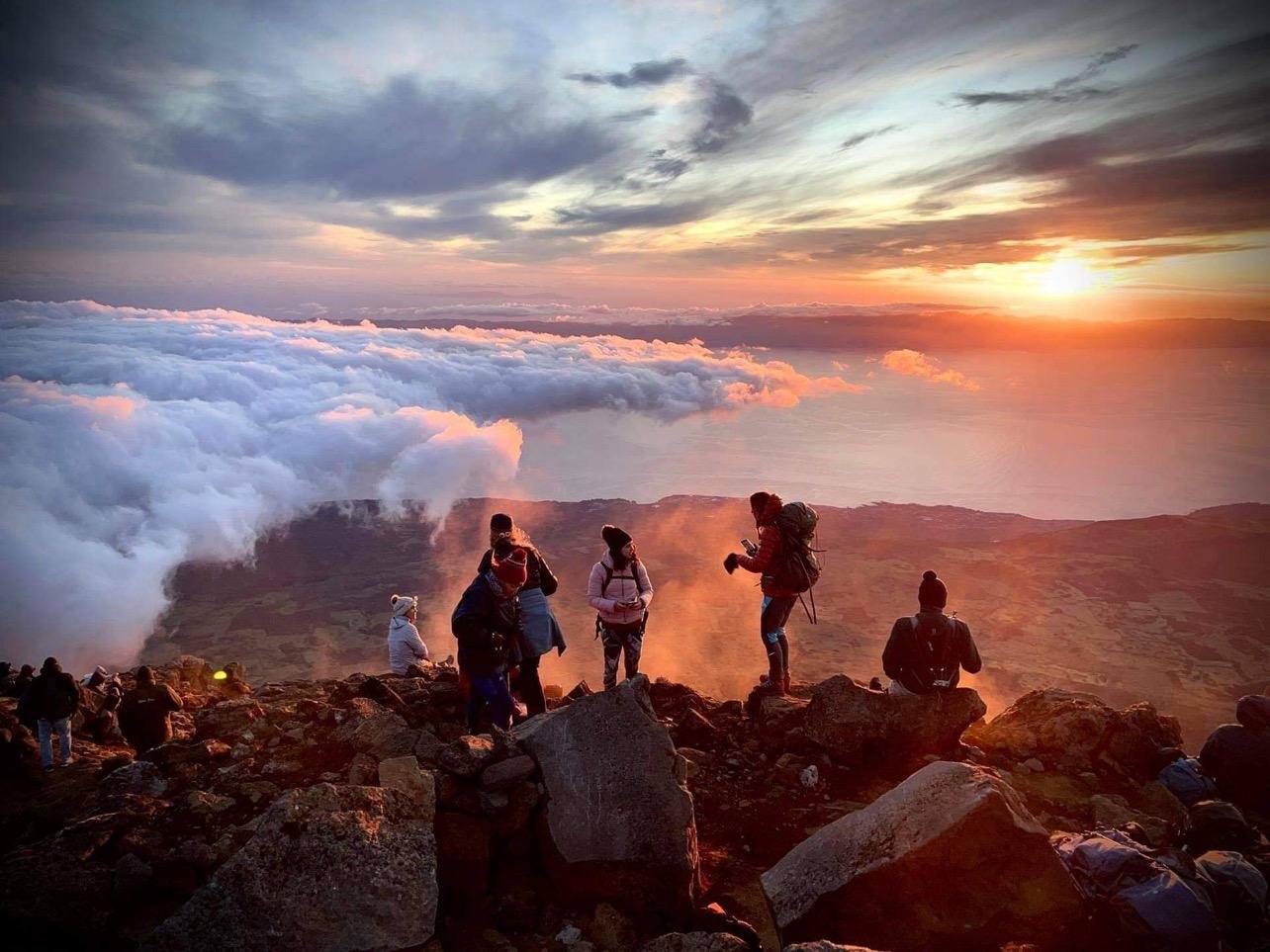
Climbers silhouetted on Pico’s summit with the sun low above the cloudsTop rated

Pico · Meets at the Mountain House for the standard climb

Pico Mountain Climb: Portugal’s Highest Point at 2,351 Metres

Go Climb Pico

4.9rating8 to 10 hours

All fees and taxes included, with guides who take photos and video, a GPS locator and a summit diploma. A night climb option aims for sunrise at the top.

  • Meals, drinks and personal hiking gear not included
  • Walking sticks and accident insurance included
  • Not suitable for children under 12 or people over 60

Free cancellation up to 24 hours before

From €129 per person

Book Now
The route

The route to Piquinho

Ascent and descent follow the same path, with about 1,100 metres up and 1,100 metres down.

  1. 01

    Mountain House, 1,230 m

    Meet your guide inside for a safety briefing of about 20 minutes.

  2. 02

    First slopes

    Native vegetation gives way to volcanic formations. This early stretch shows whether the pace suits you.

  3. 03

    Steep climb to the crater

    Around three hours on changing ground, from mud and solid rock to loose rock and sand.

  4. 04

    Piquinho, 2,351 m

    The last 15 minutes need your hands for stability. On a clear day you may see the other islands of the central group.

  5. 05

    Descent

    Three to four hours back down the same path, the most demanding part of the day.

  6. 06

    Mountain House

    The climb ends where it began.

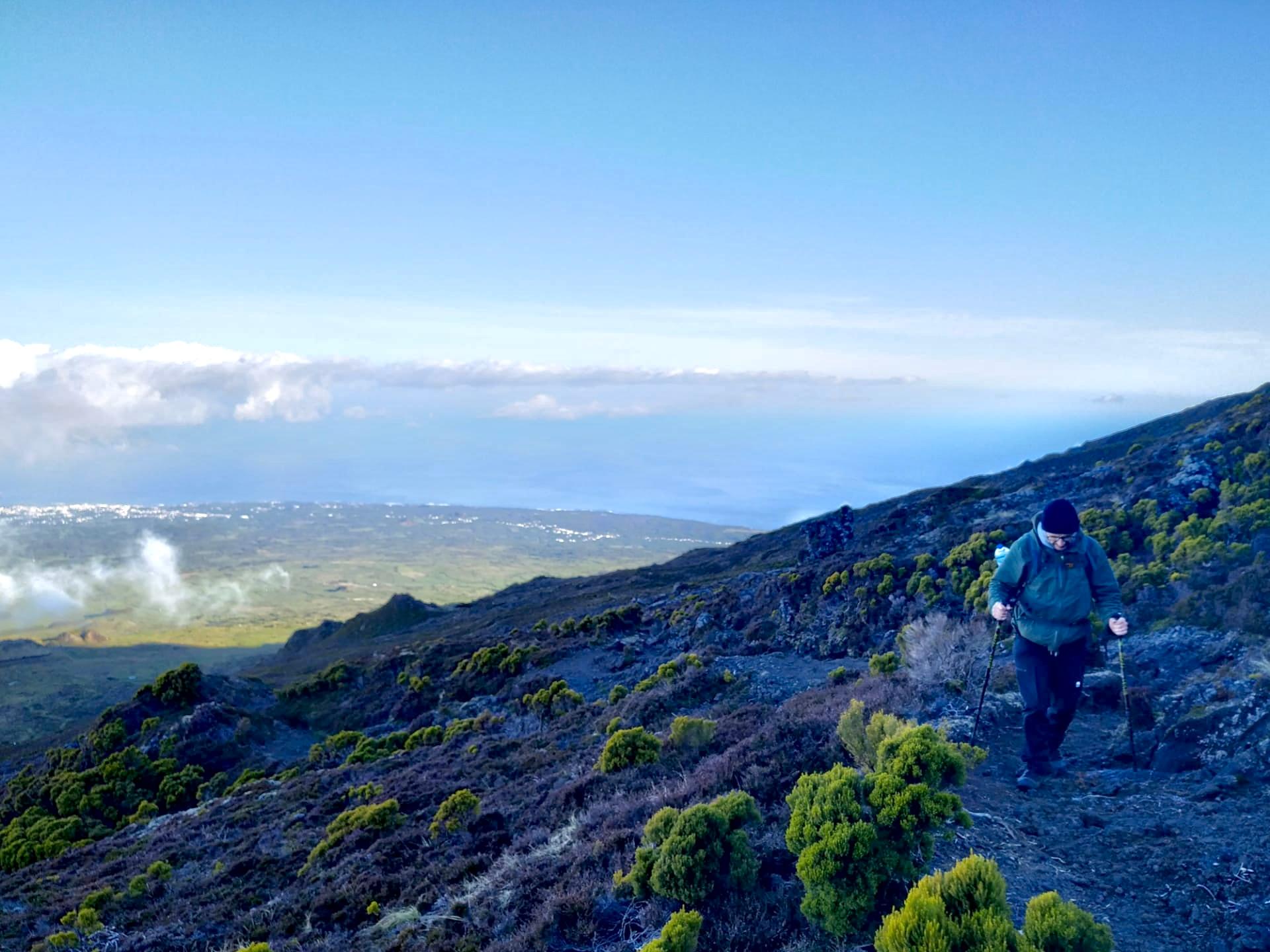
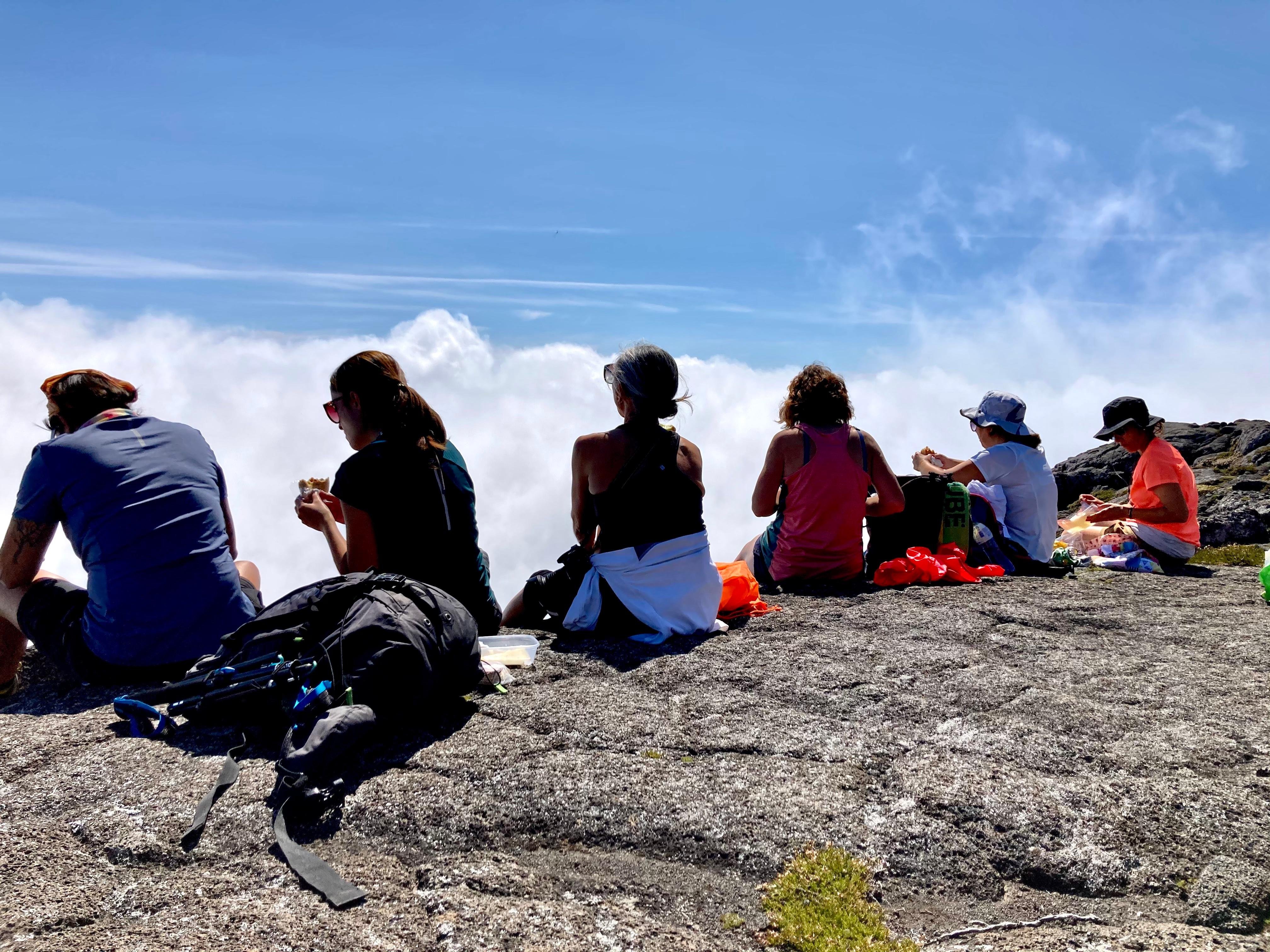
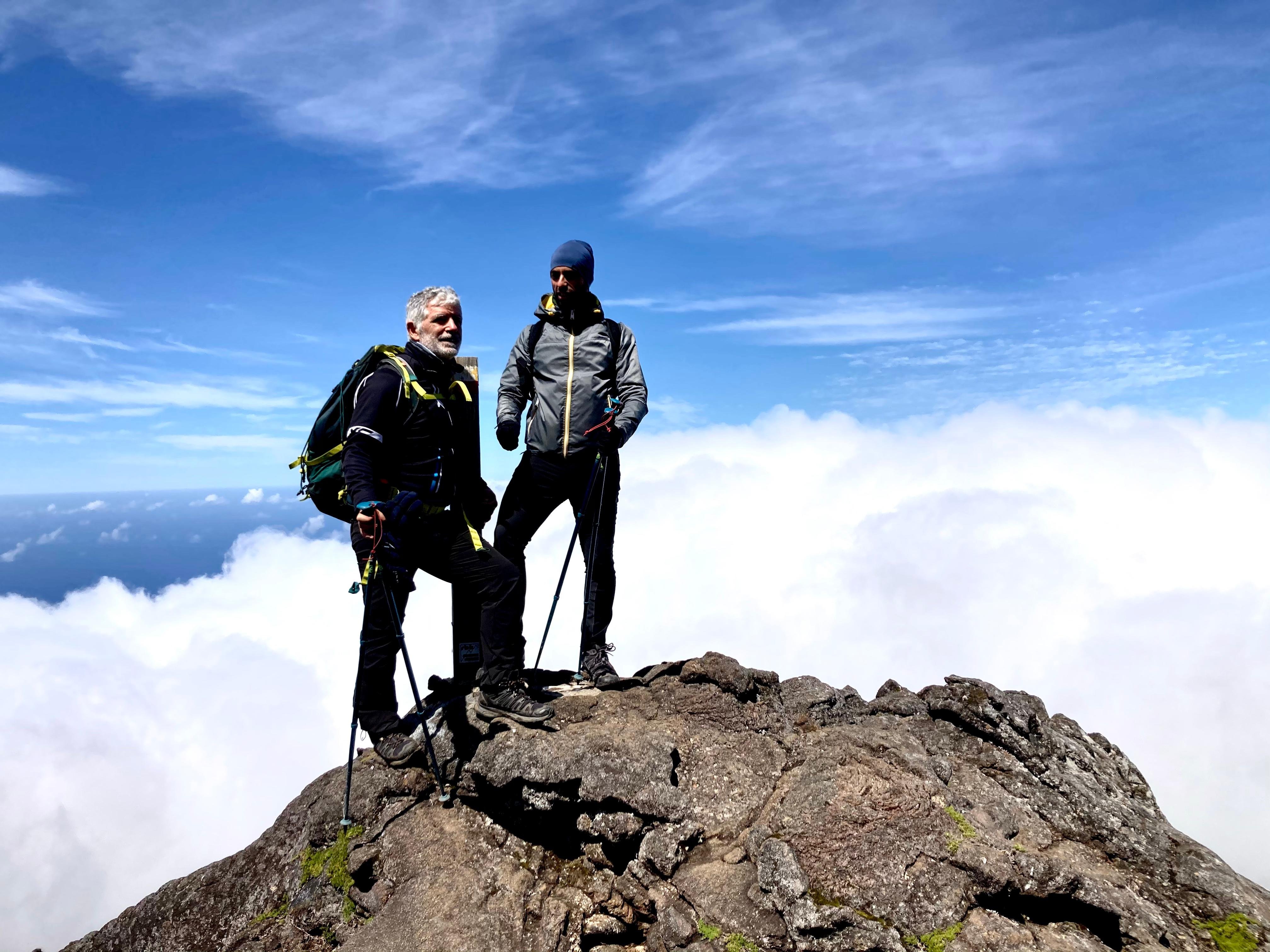
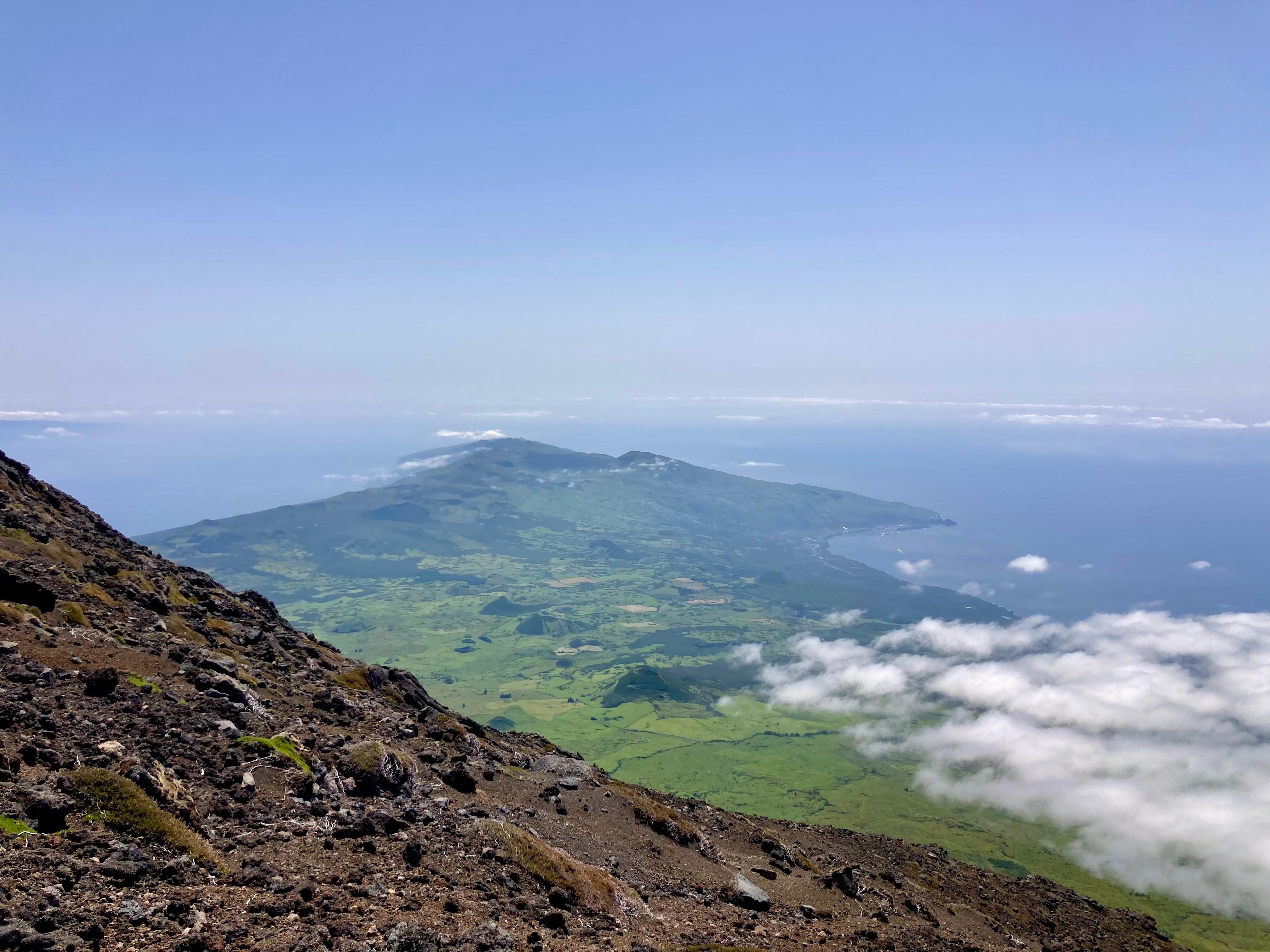
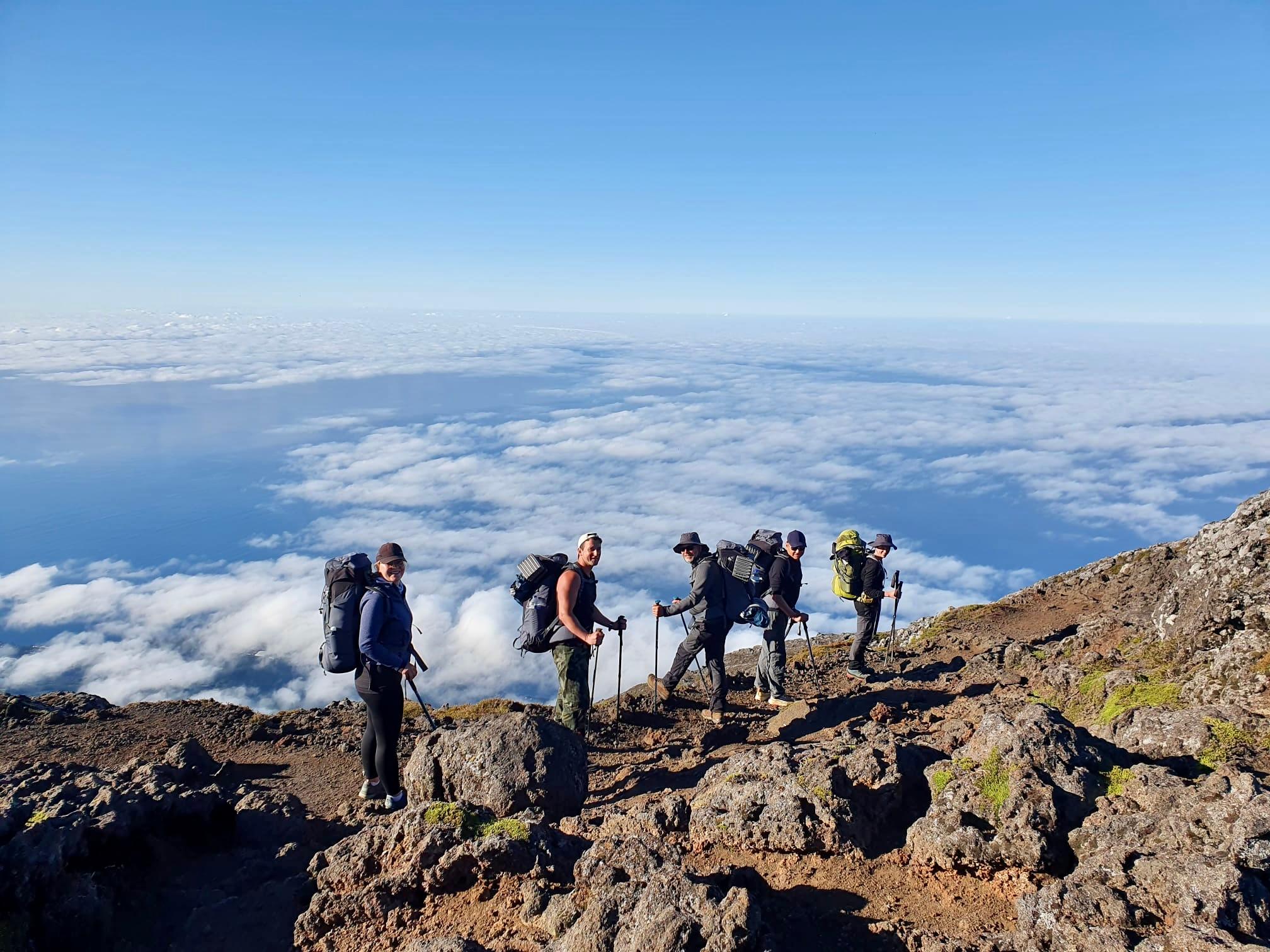
A climber on Pico’s rocky summit looking down over the islandA climber descending Pico’s dark volcanic slope with the coast far belowClimbers resting on bare rock above the clouds on PicoTwo climbers standing on the summit rocks of Piquinho above the cloudsThe view down Pico’s slope over the island and low cloud
Visual experience

The climb that ends at the top of Portugal

Every hour on Pico changes the ground under your boots, from green slopes to volcanic rock and sand. At the crater, the final lava cone rises ahead, and from Piquinho, on a clear day, the other central islands appear across the Atlantic.

Book Now
The experience

A demanding day with a big reward

This is a mountain day, not a nature walk. Good physical preparation is essential and the climb is not suitable for a sedentary lifestyle. The guide shares tips for the ascent and the descent and explains the island’s plants and geology as you go.

Weather decides a great deal. The activity can be cancelled just before it starts if conditions are poor, and in winter and spring the summit can hold snow, when crampons become mandatory. Only 30 people may stand on Piquinho at once, for up to 20 minutes each.

Book this climb if reaching the top of Portugal is a goal in itself and you are ready for about eight hours on your feet. If you want a gentler taste of the Azores, the crater-lake hikes on São Miguel are a better match.

Know the booking

What’s included

Included

  • Certified Pico Mountain guide
  • Mount Pico Natural Reserve access fee
  • Hiking poles
  • Allianz personal accident insurance
  • Summit certificate
Meeting point

Where to meet: the Mountain House

  • Your guide will be waiting inside the Mountain House, the official start of the climb.
  • When you book, send each climber’s name, date of birth and nationality so the operator can register your group before the daily limit is reached.

Operator Hominis natura

Map of the Mountain House meeting point on Pico.

  1. Mountain House (Casa da Montanha)

    Caminho Florestal nº 9, Candelária, Madalena, Pico

    Open in Google Maps
Practical details

What to know before you climb

Fitness

You should be able to climb about 300 metres of altitude per hour. The climb is not suitable for a sedentary lifestyle.

Footwear

Hiking boots or hiking shoes with good grip are mandatory. The reserve refuses entry in unsuitable footwear and sports shoes are not allowed on this tour.

Not suitable for

Children under 12, people over 70, pregnant travellers, and anyone with back, heart or respiratory problems, a fear of heights, recent surgery or a low level of fitness.

What to bring

A daypack with food, at least 1.5 litres of water, rain gear, weather-appropriate clothing, sunscreen and sunglasses.

Weather

The climb is weather-dependent and can be cancelled just before the start. Snow is possible on the summit in winter and spring.

Drones

If you plan to fly a drone, register first with ANAC, the Portuguese Civil Aviation Authority.

Traveller experiences

What climbers say about Pico with a guide

Climbers describe a tough ascent, an even tougher descent and guides who keep the group’s rhythm steady with footing tips and well-timed breaks.

“A demanding but incredibly rewarding activity! The guide was great. From the start, she put us at ease and kept us informed throughout the hiking tour. The breaks are taken at the right times and places; she even offered us tea and brownies, which were great. Thank you again!”

Sabrina · CanadaAugust 23, 2026 · Pico Mountain Climb: Your Path to Portugal’s Highest Point

“A fantastic hike that exceeded my expectations. The climb is quite challenging, but once you reach the top, the effort is amply rewarded. The most difficult part was the descent down to the valley. A round of applause for our guide, João, who was very friendly and made the day enjoyable.”

simone · ItalySeptember 15, 2026 · Pico Mountain Climb: Your Path to Portugal’s Highest Point

“Steffi did an amazing job as our guide. She was thoughtful and made everyone well aware with the challenges of the hike and gave helpful tips on how to make it easier on yourself. The hike itself was incredible. Steffi gave plenty of opportunities for pictures. The pace was not too fast or too slow.”

Clay · United StatesAugust 29, 2026 · Pico Mountain Climb: Your Path to Portugal’s Highest Point

Reviews by GetYourGuide customers who booked the tours named.

Questions

Mount Pico climb questions

How long does it take to climb Mount Pico?

A guided round trip takes about eight hours. Expect around three hours to reach the crater, a short final scramble to Piquinho and three to four hours to come back down. Go Climb Pico lists its climb at eight to ten hours.

Do you need a guide to climb Mount Pico?

No. You can climb independently once you have authorisation from the Mountain House, the Pico Nature Park headquarters or the online climb platform. The official climbing site recommends going with a qualified company and an accredited mountain guide.

Guided or self-guided hiking in the Azores

How hard is the Mount Pico climb?

The official trail is graded hard. You gain about 1,100 metres over steep, loose volcanic ground, use your hands near the top and then descend the same way.

What is Furna Abrigo on Pico?

Furna Abrigo is a volcanic cone on the mountain with a pit about 40 metres deep and a gallery that once sheltered walkers heading up Pico. Routes to Furna Abrigo carry a separate fee, while the guided climbs compared here focus on the summit.

When is the best time to climb Pico?

The Mountain House is open 24 hours a day from 1 May to 30 September, with shorter hours the rest of the year. July and August are the warmest and sunniest months in the Azores, while winter and spring can bring snow to the summit.

When to go hiking in the Azores

Can children climb Mount Pico?

Not on these tours. Both guided climbs are unsuitable for children under 12.

Hike Paradise

Book your climb to the top of Portugal

Hominis natura’s guided Pico climb is from €90 per person with the reserve access fee, poles and insurance included, and free cancellation up to 24 hours ahead.

Book Now
Our Pico pick€90 per personFree cancellation
Book Now